
3 Million
Happy customers from 70+ countries all around.

4.6/5.0
Cumulative ratings of our trips across platforms.

24/7 Support
Expert-guided trips with meticulous planning.

Smithsonian Museum tours and tickets make it easy to explore world-class exhibits with expert guides and priority access. Enjoy seamless booking, skip long queues, and experience history, science, and culture in one of the most iconic museum destinations.
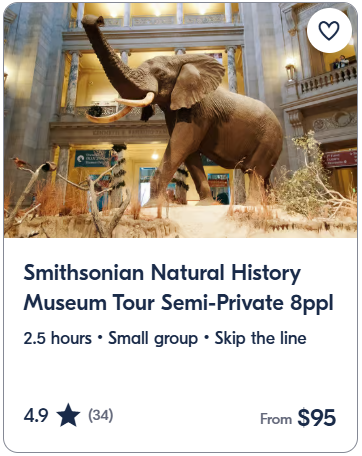

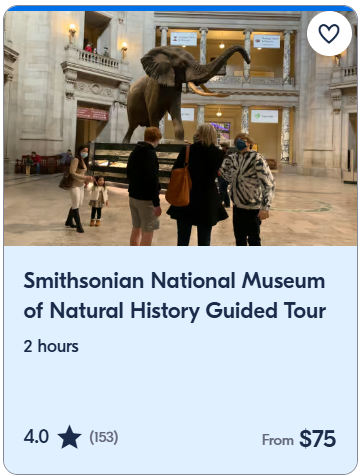



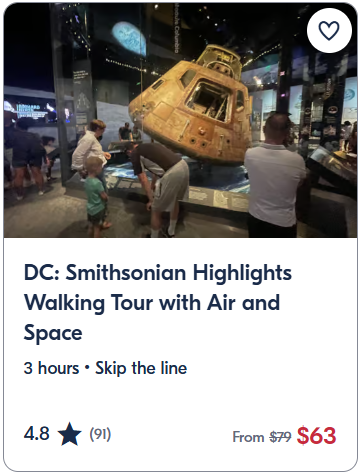









The Smithsonian Museum is part of the world-famous Smithsonian Institution, the largest museum and research network on Earth. Located mainly in Washington, D.C., it brings together history, science, space, art, and nature under one powerful name.
Founded in 1846 through the legacy of James Smithson, the museum group was created to share knowledge with the public. What makes the experience even more special is that most Smithsonian Museum locations offer free entry, allowing everyone to explore priceless collections, legendary artefacts, and globally important research without barriers.
Emma R., London
Daniel K., Berlin
Sofia M., Lisbon
Jason P., Chicago
Clara V., Paris
Mark T., Dublin










What Can Families See at Smithsonian Museum?
The Smithsonian Museum offers one of the most family-friendly learning experiences in the world. It blends fun, discovery, and education in a way that keeps children curious and adults engaged. Families can explore dinosaurs, rockets, animals, inventions, culture, and history in one connected journey. Every visit feels different, and every age group finds something to enjoy. From toddlers to grandparents, the Smithsonian Museum creates shared moments that feel meaningful and memorable.
Dinosaurs, Gems, and Wildlife at Natural History
One of the biggest family favourites is the National Museum of Natural History. Children are instantly drawn to the towering dinosaur skeletons that dominate the central hall. These life-sized fossils spark imagination and curiosity right away. Families can also explore real gemstones, glowing crystals, and rare minerals that feel almost magical in person.
The wildlife sections allow children to see animals from across the world without feeling overwhelmed. Ocean life, insects, mammals, and human origins are displayed in a clear and exciting way. Parents enjoy how simple the explanations are while still being informative. It is one of the best starting points for families visiting the Smithsonian Museum.
Rockets, Planes, and Space Travel for Young Explorers
The National Air and Space Museum is another top hit with families. Children love seeing real aeroplanes hanging overhead and learning how humans learned to fly. Space capsules, moon rocks, satellites, and space suits turn science into something real and thrilling.
Interactive stations help children understand gravity, speed, and motion through hands-on activities. Teenagers often spend the most time here, asking questions about astronauts, Mars missions, and future space travel. For many families, this museum becomes the most exciting part of their Smithsonian Museum visit.
American History Told Through Real Life Objects
Families who enjoy stories about people and everyday life often enjoy the National Museum of American History. This museum turns history into something personal. Children can see items used by real people across generations, including old toys, clothing, tools, and music instruments.
Parents appreciate how the museum connects national events with daily life. It shows how families lived during different periods, how technology changed homes, and how entertainment evolved over time. This type of storytelling helps children understand that history is not just about dates but about people like them.
Live Animals and Outdoor Learning at the Zoo
For families who prefer open spaces, the Smithsonian National Zoo offers a relaxed and joyful experience. Children can see animals up close while walking through wide paths and shaded areas. Seeing real animals builds a stronger connection than pictures ever could.
The zoo also teaches children about conservation, habitats, and animal care in a very natural way. Parents appreciate how learning happens without pressure. It feels like a day out rather than a lesson, which keeps children happy and engaged.
Hands-On Learning for Curious Minds
Many Smithsonian Museum locations offer interactive exhibits designed especially for young learners. Children can touch models, press buttons, solve puzzles, and take part in small experiments. These hands-on areas help turn learning into play. This approach works well for younger children who learn best by doing rather than just reading.
Families often spend longer in these areas because children feel involved rather than passive. Parents also enjoy watching their children solve problems and ask questions in real time. This interactive style keeps energy high throughout the visit.
Art and Creativity for Growing Imagination
Families who enjoy creativity can explore the Smithsonian American Art Museum. Children see paintings, sculptures, and modern art that reflect real life, imagination, and social change. Parents often use these visits to help children express opinions and emotions through what they see.
Art encourages children to think in different ways. They learn that there is no single correct answer. This creative freedom builds confidence and emotional awareness. It also gives families a calmer and more reflective experience within the Smithsonian Museum network.
Educational Shows, Workshops, and Family Programs
The Smithsonian Museum regularly hosts family-friendly events such as storytelling sessions, science demonstrations, craft workshops, and seasonal activities. These programs give children a chance to learn outside traditional exhibits. Families who join these activities often find the experience more personal and engaging.
These programs also support school learning in a fun way. Children get excited about subjects they may find difficult in classrooms. Parents value these sessions because they mix education with enjoyment in a stress-free setting.
A Safe and Comfortable Environment for Families
One reason families feel comfortable at the Smithsonian Museum is the well-organised layout. Clear signs, clean rest areas, food courts, and seating zones help parents manage long visits without stress. Pushchair access and family facilities make it easier for families with young children to explore at a comfortable pace.
The calm and respectful atmosphere also allows children to learn how to behave in public spaces while still enjoying themselves. This balance of discipline and freedom works well for family visits.
Shared Learning That Builds Stronger Bonds
What truly makes the Smithsonian Museum special for families is how it brings everyone together. Parents and children learn side by side. Questions are asked naturally. Conversations continue long after the visit ends. These shared moments strengthen family bonds through discovery and curiosity.
Children remember the giant dinosaurs, the rockets, the animals, and the stories. Parents remember their children’s excitement. These memories stay for life and often lead families to return again and again.
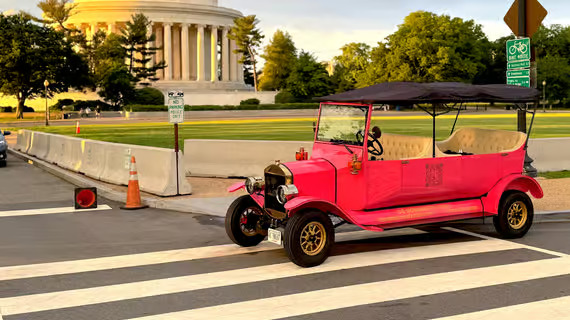
Explore Washington, DC in style with the Day & Night Electric Cart & Vintage Car Tour. Glide past iconic landmarks in comfort, enjoy live guided storytelling, and see the city transform from daylight charm to glowing night beauty in one seamless, relaxing experience.
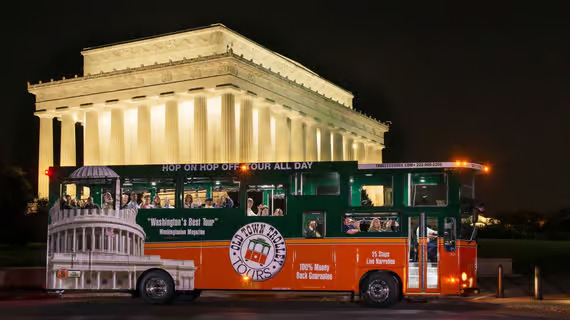
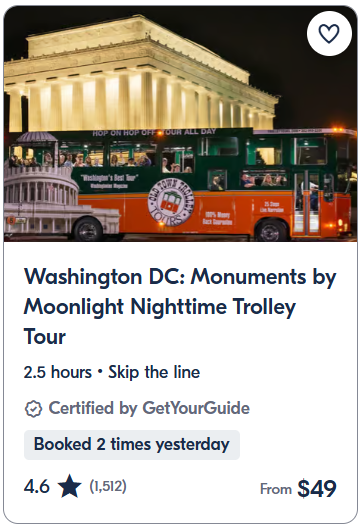
Experience Washington, DC in a magical glow with the Monuments by Moonlight Nighttime Trolley Tour. Travel through illuminated landmarks in comfort, enjoy engaging live narration, and see the capital’s most famous memorials shine after dark for a truly memorable evening journey.

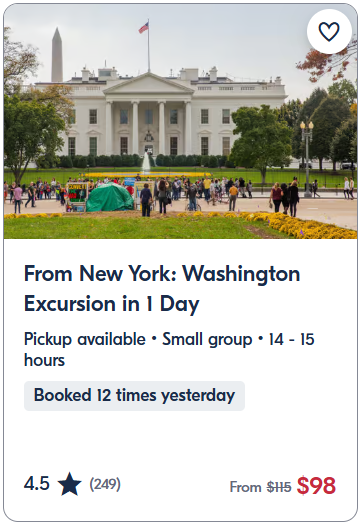
Travel from New York to Washington in one seamless day with this guided excursion. Visit iconic landmarks, explore historic memorials, and enjoy expert commentary throughout the journey. It is the perfect way to experience the capital’s highlights without the stress of overnight planning.

Travel from New York City to Washington DC on a full-day city highlights tour packed with iconic landmarks, historic memorials, and guided storytelling. Enjoy smooth transport, expert insights, and a perfectly planned itinerary that lets you see the capital’s must-visit attractions in one rewarding day.

Washington DC Day & Night Guided Monuments Tour by E-Cart offers a smooth and scenic way to explore the capital’s most famous memorials in comfort. Enjoy live narration, easy access, and stunning views as the city shifts from daylight energy to glowing evening beauty in one relaxed, memorable journey today.

DC Hop-On Hop-Off Open-Top City Tour with 17 Stops by Cart lets you explore Washington DC at your own pace. Ride in open comfort, enjoy live or audio commentary, and hop off at top landmarks whenever you like. It is a flexible, fun way to see the capital in one easy day.




The Smithsonian Museum is best known for its world-class collections covering space, science, history, culture, and nature. It is part of the Smithsonian Institution, the largest museum and research network in the world, attracting millions of visitors every year.
Yes, entry to most Smithsonian Museum locations is completely free. This allows students, families, and travellers to explore priceless artefacts and exhibitions without spending on tickets. Some special exhibitions or guided experiences may require advance booking or separate charges.
The Smithsonian Museum network includes 19 museums, along with galleries, research centres, and the national zoo. Together, they cover nearly every major subject, from aviation and natural history to art, culture, and technology, all under one trusted educational system.
First-time visitors often start with the National Air and Space Museum or the National Museum of Natural History. These museums offer exciting visuals, interactive displays, and broad appeal for all age groups, making them ideal introductions to the Smithsonian Museum experience.
Yes, the Smithsonian Museum is very family-friendly. Children enjoy hands-on exhibits, dinosaurs, space displays, animals, and creative learning zones. Parents appreciate the safe environment, clear layout, and educational value that keeps children engaged without feeling overwhelmed.
Visitors should plan at least half a day to explore one or two Smithsonian Museum locations properly. A full day allows time for deeper exploration. Because there is so much to see, many visitors return over multiple days to fully enjoy the experience.